
Forty Years ago in the X-15 Flight Test Program, Table of Contents |
Forty years ago, the three X-15 rocket planes were the pinnacle of aerospace engineering. They were capable of higher speeds and altitudes than any other piloted vehicle. Except for the Space Shuttle, they are still the fastest and highest flying winged vehicles ever. This series of pages follows the history of the X-15 program, tracking the events as they occurred forty years ago.
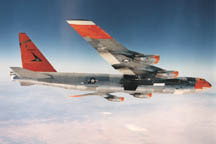 1959 - January
1960, a series of three flights were made with the X-15-1
captive on the wing of the NB-52A. The X-15-2 was first displayed
to the public at the 1959 Air Force Flight Test Center Open House
Display alongside the NB-52A. Scott Crossfield made the first
glide flight in the X-15-1. He then made three powered flights
testing the pair of XLR-11 rocket engines in the X-15-2. An
engine explosion cut the third powered flight short, and the
fuselage of the X-15 broke when it landed heavy.
1959 - January
1960, a series of three flights were made with the X-15-1
captive on the wing of the NB-52A. The X-15-2 was first displayed
to the public at the 1959 Air Force Flight Test Center Open House
Display alongside the NB-52A. Scott Crossfield made the first
glide flight in the X-15-1. He then made three powered flights
testing the pair of XLR-11 rocket engines in the X-15-2. An
engine explosion cut the third powered flight short, and the
fuselage of the X-15 broke when it landed heavy.
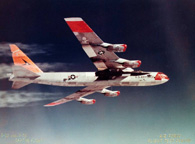 January - April
1960, Scott Crossfield made the first powered flight of the
X-15-1, after which it was transferred to NASA. He expanded the
flight envelope of the X-15-2 following its return to Edwards Air
Force Base. Joe Walker and Bob White made the first NASA flights
of the X-15-1.
January - April
1960, Scott Crossfield made the first powered flight of the
X-15-1, after which it was transferred to NASA. He expanded the
flight envelope of the X-15-2 following its return to Edwards Air
Force Base. Joe Walker and Bob White made the first NASA flights
of the X-15-1.
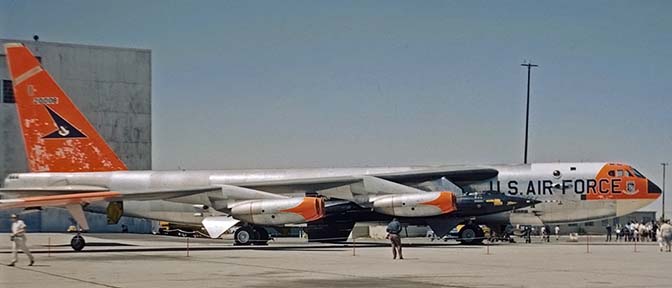 April - May 1960,
reaction control thrusters were installed in the X-15-2. Joe
Walker exceeded Mach 3 in the X-15-1. The X-15-1 and X-15-2 were
displayed at the 1960 Air Force Flight Test Center Open House
Display with the NB-52B.
April - May 1960,
reaction control thrusters were installed in the X-15-2. Joe
Walker exceeded Mach 3 in the X-15-1. The X-15-1 and X-15-2 were
displayed at the 1960 Air Force Flight Test Center Open House
Display with the NB-52B.
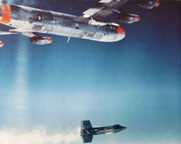 June - August
1960, a series of attempts were made to launch Joe Walker in
the X-15-1 to make an assault on Mel Apt's speed record. The
X-15-3 arrived at Edwards Air Force Base with the XLR-99 engine.
The engine exploded during a ground test run, nearly destroying
the X-15-3. After a two month hiatus, Joe Walker set a new speed
record in the X-15-1, and Bob White set a new altitude record.
June - August
1960, a series of attempts were made to launch Joe Walker in
the X-15-1 to make an assault on Mel Apt's speed record. The
X-15-3 arrived at Edwards Air Force Base with the XLR-99 engine.
The engine exploded during a ground test run, nearly destroying
the X-15-3. After a two month hiatus, Joe Walker set a new speed
record in the X-15-1, and Bob White set a new altitude record.
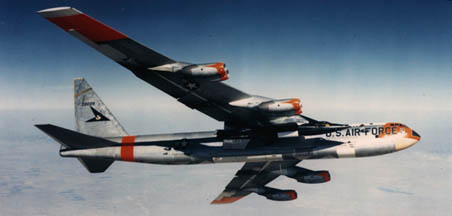 August - October
1960, The X-15-2 was out of service until the installation of
its XLR-99 engine in September. Walker and White collected
control and performance data and new pilots Commander Forrest
Petersen and NASA pilot Jack McKay were checked out in the
X-15-1. A series of technical difficulties postponed Crossfield's
first flight with the XLR-99 installed in the X-15-2.
August - October
1960, The X-15-2 was out of service until the installation of
its XLR-99 engine in September. Walker and White collected
control and performance data and new pilots Commander Forrest
Petersen and NASA pilot Jack McKay were checked out in the
X-15-1. A series of technical difficulties postponed Crossfield's
first flight with the XLR-99 installed in the X-15-2.
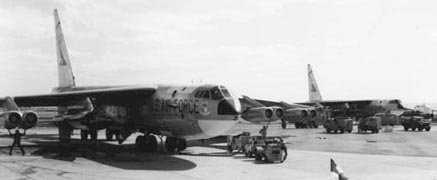 November 1960,
Captain Robert Rushworth and Neil Armstrong made their first
flights in the X-15-1, and Scott Crossfield piloted the first
X-15 flight powered by the XLR-99 engine.
November 1960,
Captain Robert Rushworth and Neil Armstrong made their first
flights in the X-15-1, and Scott Crossfield piloted the first
X-15 flight powered by the XLR-99 engine.
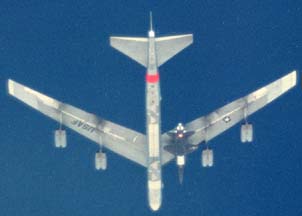 November 1960 -
January 1961, Scott Crossfield concluded the North American
contractor demonstration of the X-15 equipped with the XLR-99
rocket engine.
November 1960 -
January 1961, Scott Crossfield concluded the North American
contractor demonstration of the X-15 equipped with the XLR-99
rocket engine.
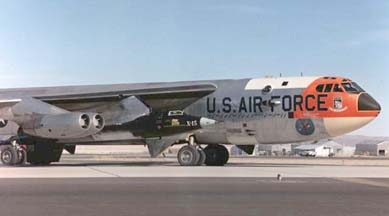 February - March
1961, Major Robert White flew the last X-15 mission powered
by the XLR-11 twin pack of rocket engines. NASA conducted its
first operations with the X-15-2 which had received a new nose.
The X-15 made the first mach-4 flight and set a new altitude
record.
February - March
1961, Major Robert White flew the last X-15 mission powered
by the XLR-11 twin pack of rocket engines. NASA conducted its
first operations with the X-15-2 which had received a new nose.
The X-15 made the first mach-4 flight and set a new altitude
record.
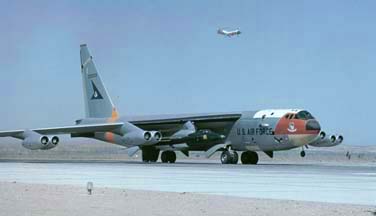 April - June
1961, Joe Walker and Major Bob White set three new speed
records in the X-15-2, including the first flight faster than
Mach 5. Frank Sinatra's Essex Productions filmed scenes for the
movie X-15 at the Air Force Flight Test Center.
April - June
1961, Joe Walker and Major Bob White set three new speed
records in the X-15-2, including the first flight faster than
Mach 5. Frank Sinatra's Essex Productions filmed scenes for the
movie X-15 at the Air Force Flight Test Center.
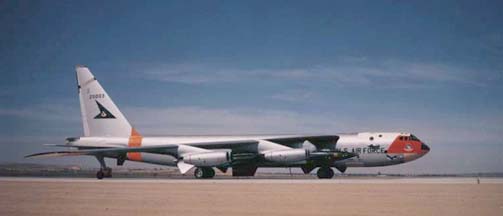 July - August
1961, Commander Forrest Petersen made the first flight of the
X-15-1 with the XLR-99 engine.
July - August
1961, Commander Forrest Petersen made the first flight of the
X-15-1 with the XLR-99 engine.
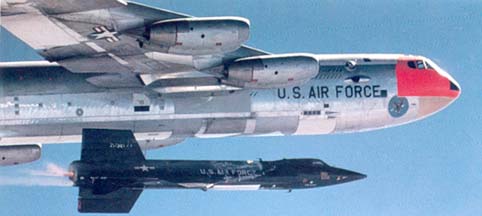 September -
November 1961, Four pilots made six X-15 flights. The maximum
Mach number attained by the X-15 was increased on three occasions
and the altitude record was increased from 169,600 to 217,000
feet. The X-15 attained Mach 6, the goal originally established
for the program. On two occasions, one of the panes of the
windshield broke as the X-15-2 was decelerating after setting a
new speed record. Major Robert Rushworth made one flight with the
lower ventral removed to evaluate the stability of the X-15 in
that configuration.
September -
November 1961, Four pilots made six X-15 flights. The maximum
Mach number attained by the X-15 was increased on three occasions
and the altitude record was increased from 169,600 to 217,000
feet. The X-15 attained Mach 6, the goal originally established
for the program. On two occasions, one of the panes of the
windshield broke as the X-15-2 was decelerating after setting a
new speed record. Major Robert Rushworth made one flight with the
lower ventral removed to evaluate the stability of the X-15 in
that configuration.
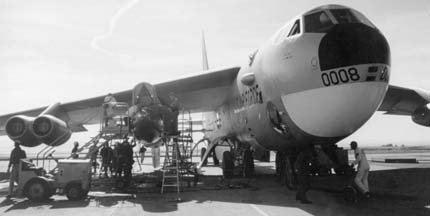 November 1961-
March 1962, Following the achievment of the X-15's design
maximum mach number on November 9, 1961, the emphasis of the
program shifted from envelope expansion to flight research at
high mach numbers and altitudes. Repairs to the X-15-3 were
completed North American at El Segundo, and it returned to
Edwards Air Force Base for its first flight a year and a half
after it exploded in the rocket engine test stand.
November 1961-
March 1962, Following the achievment of the X-15's design
maximum mach number on November 9, 1961, the emphasis of the
program shifted from envelope expansion to flight research at
high mach numbers and altitudes. Repairs to the X-15-3 were
completed North American at El Segundo, and it returned to
Edwards Air Force Base for its first flight a year and a half
after it exploded in the rocket engine test stand.
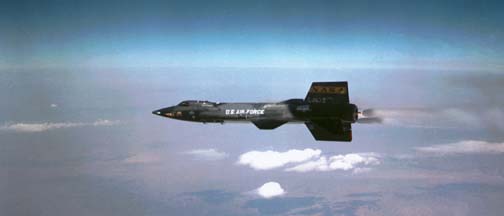 April 1962,
No X-15 missions were launched between January 17 and the
beginning of April 1962. The pace of the program picked up
significantly in April. Sixteen X-15 missions would be launched
in the next four months. The X-15-3 was expanding its altitude
envelope. The X-15-2 was slated to evaluate airframe heating, and
the X-15-1 was expected to set another new altitude record.
April 1962,
No X-15 missions were launched between January 17 and the
beginning of April 1962. The pace of the program picked up
significantly in April. Sixteen X-15 missions would be launched
in the next four months. The X-15-3 was expanding its altitude
envelope. The X-15-2 was slated to evaluate airframe heating, and
the X-15-1 was expected to set another new altitude record.
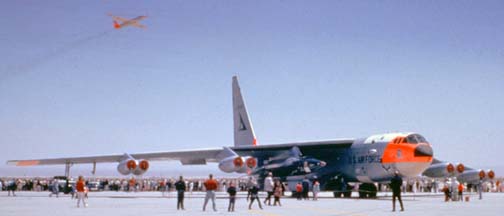 At the beginning of May 1962,
Major Robert Rushworth was preparing to fly an airframe heating
investigation with the X-15-2, but first it would be carried
across the country by the NB-52A to appear at the Eglin Air Force
Base airshow. Major Bob White was planning to evaluate the
performance of the Alternate Stability Augmentation System (ASAS)
of the X-15-1 at high angle of attack.
At the beginning of May 1962,
Major Robert Rushworth was preparing to fly an airframe heating
investigation with the X-15-2, but first it would be carried
across the country by the NB-52A to appear at the Eglin Air Force
Base airshow. Major Bob White was planning to evaluate the
performance of the Alternate Stability Augmentation System (ASAS)
of the X-15-1 at high angle of attack.
Send a message to Brian
Go to home page of the Goleta Air & Space Museum.